Late Pleistocene Homo
Homo heidelbergensis
700–200 ka·500 ka·Discovered 1907
Description
Mauer mandible (Germany), found in 1907. Likely common ancestor of Neanderthals, Denisovans, and H. sapiens.
Notable facts
- Made wooden spears (Schöningen, 400 ka)
- Cranium near modern size
- Likely domestic fire user
- Origin of Neanderthal/sapiens split
Key specimens
Mauer 1
Mauer mandible
Type specimen — robust mandible found in 1907 in Germany.
Bodo
Bodo cranium
Ethiopian specimen with cut marks suggesting ritual defleshing.
Sima de los Huesos
Pit of Bones
~30 individuals from Atapuerca — possibly intentional accumulation.
Anatomy
Robust skeleton, prominent brow, large cranial capacity.
Locomotion
Modern bipedal, cold-adapted in northern populations.
Diet
Big-game hunting, cooked food.
Tools & culture
Wooden spears, hand-axes, possibly first symbolic behaviors.
Where to see it
Heidelberg University, Germany; Museum of Human Evolution, Burgos.
Media & references
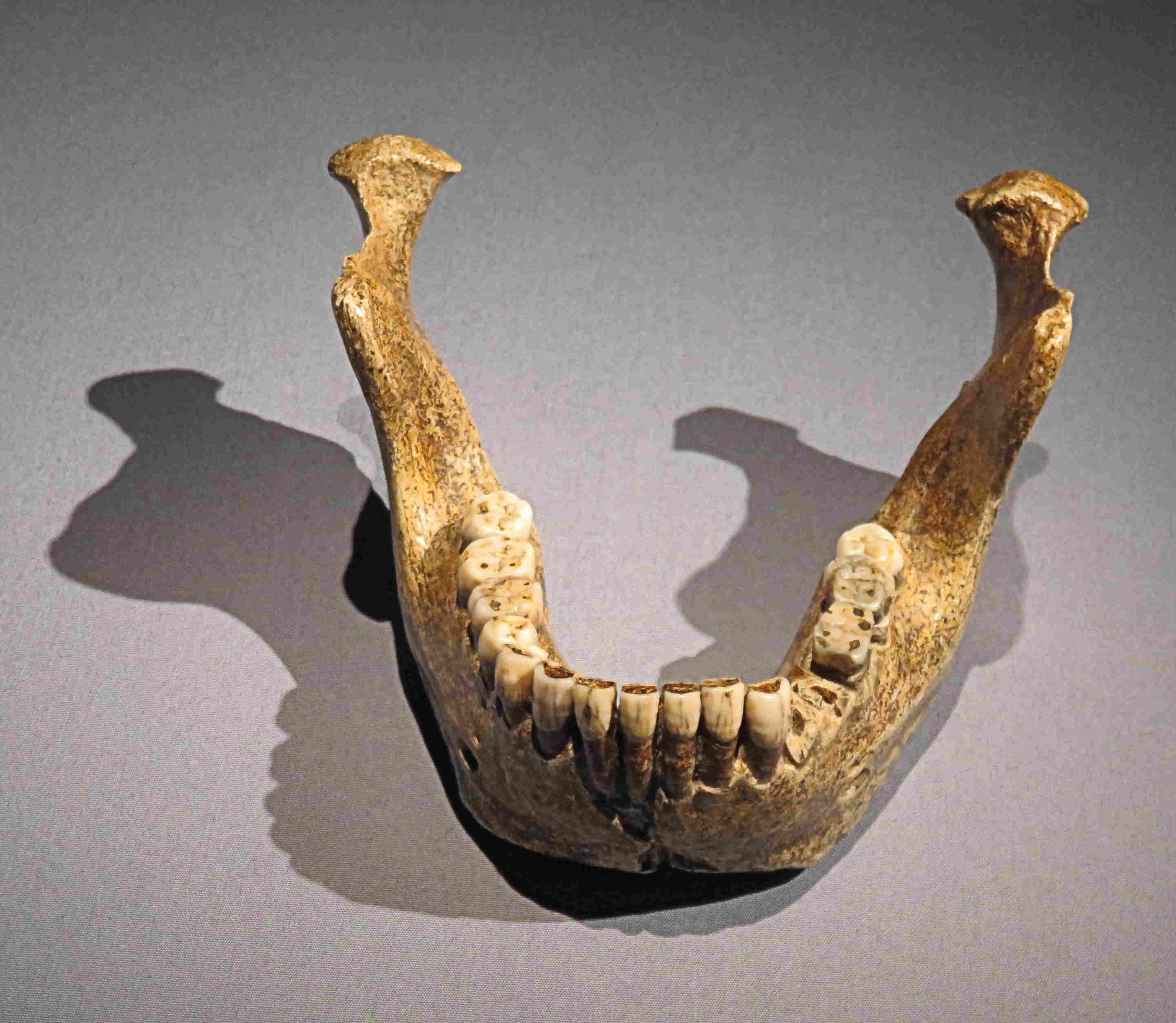
Image ·
Wikimedia Commons · Wikipedia article